Commonly Use Quick Turn Printed Circuit Boards
In business, it’s a cliche to say “time is money,” and nowhere is that more true than in PCB fabrication. When a project has to be completed quickly, quick turn fabrication is the best solution. In fact, quick-turn PCB manufacturers are able to shrink the lead time of traditional fabrication work from weeks into as little as 24 hours. The technology behind this is based on advanced manufacturing processes and automated workflows geared toward speed.
The most common uses of quick turn printed circuit boards are prototyping and low-volume production. Many industries, such as aerospace and telecommunications, rely heavily on quick-turn PCBs for their iterative design and test cycles. This helps them detect errors in the design before committing to full-production runs and reduces their time to market.
Quick-turn PCBs are also critical for bringing cutting-edge technologies to the market. By reducing the time it takes to get products to market, manufacturers can be more responsive to the demands of the marketplace.
While rapid turnaround times can help to reduce the cost of a product and shorten the overall time it takes to bring it to market, there are some limitations associated with this type of production. The most important consideration is that quality must not suffer. In order to maintain quality standards, quick-turn manufacturers must be smart about how they manage their resources and utilize their equipment to the fullest extent.
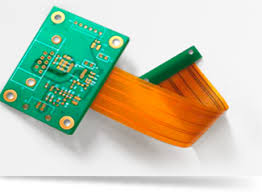
What Industries Commonly Use Quick Turn Printed Circuit Boards?
This can be accomplished through a combination of several strategies, including demand-driven production, Kanban-using pull systems that emphasize adaptability rather than absolute efficiency, work order priority in keeping with customer needs, and strategic storage of components. Similarly, the use of more intelligent inspection techniques—including automated optical and x-rays as well as selective post production quality assurance sampling—allows quick-turn assemblers to squeeze manufacturing cycle times without sacrificing quality levels.
Another crucial aspect is to minimize the number of components required for each board. By choosing readily available parts, avoiding complex component footprints, and minimizing the use of blind and buried vias, quick-turn manufacturers can dramatically reduce the fabrication cycle times and costs. In addition, opting for a more cost-effective 1 oz copper weight can reduce the amount of time needed to complete each lamination cycle.
Lastly, quick-turn PCB assemblers can further optimize their processes by using software that connects all aspects of the production process to streamline workflow and maximize automation. This can be especially useful in high-speed assembly operations where the risk of error increases with increased throughput. This can be mitigated by utilizing automated AOI (automated optical inspection) that can spot mistakes and rework them quickly.
By leveraging these tools, quick-turn PCB assemblers are able to achieve an industry-leading less than one week lead time even for highly complex multi-layer boards sporting brutal component populations. With further improvements in CAD/CAM software, automation, and material science, this cycle time will continue to decrease, while simultaneously increasing quality and reliability. In the end, it’s the combination of these innovations that will allow a growing number of companies to get their innovative products to market faster and stay ahead of the competition.