solder bridging during printed circuit board assembly services
Preventing solder bridging is a critical aspect of ensuring the quality and reliability of printed circuit board (PCB) assembly services. Solder bridging occurs when solder connects two or more adjacent pads or leads on a PCB, creating unintended electrical connections that can cause short circuits and compromise the functionality of the assembly. PCB assembly services employ various techniques and best practices to minimize the risk of solder bridging during the assembly process.
One of the primary methods used to prevent solder bridging is proper stencil design and solder paste application. Stencils are used to deposit solder paste onto the surface of the PCB, which forms the solder joints between the components and the PCB pads during the reflow soldering process. By designing stencils with precise aperture sizes and spacing, printed circuit board assembly services can control the amount of solder paste deposited onto the PCB, minimizing the risk of excess solder and solder bridging. Additionally, employing precise solder paste application techniques, such as using squeegee blades with the appropriate pressure and angle, ensures uniform and consistent solder paste deposition, further reducing the likelihood of solder bridging.
Furthermore, optimizing reflow soldering profiles is essential for preventing solder bridging during the assembly process. Reflow soldering involves heating the solder paste to a liquid state and then cooling it to form the solder joints between the components and the PCB pads. By carefully controlling the temperature, ramp-up, soak, and cooling rates during the reflow process, PCB assembly services can ensure that the solder paste reflows evenly and uniformly, minimizing the risk of solder bridging. Additionally, optimizing the reflow atmosphere and conveyor speed helps prevent oxidation and ensure proper wetting of the solder joints, further reducing the likelihood of solder bridging.
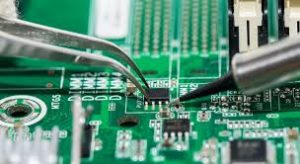
How do you prevent solder bridging during printed circuit board assembly services?
Moreover, implementing proper component placement and orientation techniques is essential for preventing solder bridging during PCB assembly services. Components should be placed on the PCB with the correct orientation and alignment to ensure that the solder joints form correctly during the reflow soldering process. Additionally, ensuring adequate spacing between components and PCB pads reduces the risk of solder bridging by minimizing the chance of solder flowing between adjacent pads or leads. PCB assembly services employ advanced placement equipment and vision systems to achieve precise component placement and alignment, ensuring that components are positioned correctly and solder bridging is minimized.
In addition to these techniques, PCB assembly services employ thorough inspection and quality control measures to detect and prevent solder bridging issues. Automated optical inspection (AOI) systems and X-ray inspection equipment are used to inspect solder joints and detect any anomalies, including solder bridging, voids, and insufficient solder. By conducting comprehensive inspections throughout the assembly process, PCB assembly services can identify and rectify solder bridging issues before they impact the functionality and reliability of the final product. Additionally, implementing robust training programs for assembly operators ensures that personnel are trained to recognize and address solder bridging issues effectively, further minimizing the risk of defects and rework.
In conclusion, preventing solder bridging is essential for ensuring the quality and reliability of printed circuit board assembly services. By employing proper stencil design and solder paste application techniques, optimizing reflow soldering profiles, implementing precise component placement and orientation, and conducting thorough inspection and quality control measures, PCB assembly services can minimize the risk of solder bridging and produce high-quality electronic assemblies that meet the requirements and expectations of customers and end-users.