GRC Help Manage Third-Party Risks
The growing complexities of today’s business environment are amplifying the pressure on executives and boards to make smart decisions in the face of risks and threats. Whether it’s the threat of cyberattacks, new regulations and standards like GDPR, or the ever-increasing volume of third-party relationships, these issues are increasing in severity and frequency – and impacting organizations from every sector. The need for a robust governance, risk and compliance (GRC) framework is greater than ever.
GRC can help manage third-party risks and deliver a unified, seamless approach to managing internal and external risk and compliance. But in order to be effective, it must incorporate a holistic approach and involve all departments within the organization. To get there, businesses need to rethink how they organize and structure their GRC programs.
Traditionally, grc governance risk compliance activities have been siloed and relegated to specialized departments or programs. The problem is that when different teams are working in silos, it’s difficult to coordinate their efforts and ensure that all stakeholders are being addressed. The result is that GRC practices can be sub-par and costly.
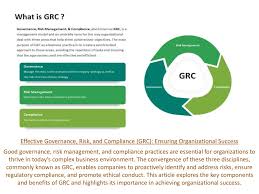
How Can GRC Help Manage Third-Party Risks?
In addition, many GRC teams are understaffed and overwhelmed. As a result, they are not able to keep pace with the rigors of the job and must make concessions in other areas – like the quality of their reports or the accuracy of their data. A unified GRC strategy, coupled with improved analytics and access to risk-based intelligence, can provide significant benefits for all departments and stakeholders – not just the ones that are involved in governance, risk and compliance activities.
Another issue is that some grc governance risk compliance programs are not scalable and sustainable. This can lead to ineffective frameworks and a lack of visibility into the business. This can cause problems like high costs, missed opportunities and a negative perception of the company.
To combat these problems, the first step is to assess where the company currently stands on its GRC maturity journey. This will help determine the gaps and prioritize the areas for improvement. In addition, it’s important to invest in a good GRC platform that can automate processes and streamline data collection and analysis. This will increase efficiency and ensure that information is accurate and up to date.
Once these improvements are made, the next step is to define a GRC roadmap and goals. The key is to develop a plan that is both comprehensive and practical so that it will be accepted by the team members and leadership. This will include setting measurable metrics and ensuring that the GRC process is updated with emerging risks.
It’s also crucial to establish a clear communication and accountability structure. This will allow the organization to avoid overlapping initiatives and reduce the chance of inadvertent conflicts. Lastly, it’s critical to build trust and collaboration between the various teams that are responsible for GRC. This will help to increase efficiency, minimize errors and reduce cost. This can be done through a variety of means, including regular meetings and workshops, leveraging third-party tools like Vanta to perform automated GRC activities and creating collaborative workspaces for all GRC related tasks.