Reformer Improve Coordination
The Reformer may look intimidating with all of its springs, straps and movable platforms, but it’s actually one of the most versatile pieces of equipment in traditional Pilates studios. In fact, most reformer classes are done lying down on the machine, which helps decompress the spine and allows you to move at deeper angles in your workout compared to mat exercises.
The reformer’s unique construction, which includes a moving carriage and movable springs, creates resistance that challenges your balance and core muscles. This instability also increases your range of motion and encourages fluid movement that improves coordination.
Joseph Pilates envisioned an all-encompassing approach to physical training that addressed strength, posture, flexibility and core stability. He believed that regulated movements, proper breathing and mental focus could help anyone achieve their health goals, regardless of age or fitness level. This holistic approach, paired with the versatility of the reformer, made his method accessible to a wide range of people, including those suffering from injuries and limitations.
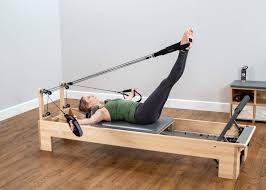
Developed in the 1920s, the Pilates Reformer is an exercise machine that offers a low-impact, full-body workout. It resembles a rehab treatment table but has a sliding platform, called a carriage, connected to the end of a frame with color-coded springs and shoulder blocks. A footbar and long straps at the other end of the frame allow you to use your hands or feet to push and pull the carriage along the springs. The springs can be adjusted to increase or decrease resistance, which can make the workout harder or easier.
Does the Reformer Improve Coordination?
Most reformer exercises involve circular movements that build your core strength and improve your balance and coordination. They also work to elongate your muscles, which can help you feel longer and more flexible in your body. Unlike some types of cardio workouts, reformer exercises are centered around controlled movements and breath. This helps improve your balance, focus and overall posture while decreasing the chance of injury.
The Reformer movable springs provide resistance that builds and shapes muscles, and improves your flexibility. Its unique construction also puts a particular emphasis on the core muscles, which strengthens your core, improves your balance and enhances your overall stability. It also helps you to better engage your muscles, making it more difficult to cheat during a workout by using the wrong muscles to compensate for weak ones.
To improve your coordination, try the Long Stretch series on the Reformer, which requires you to lie on your back with both feet in the straps at a 45-degree angle and lift your legs up toward the ceiling as high as possible without letting them go past your head. Repeat the circle 10 times and then switch sides to repeat the same sequence on the other side of the body. This exercise targets the thigh and hip joints, but also challenges the shoulders and core.
Many people with injuries, such as those with scoliosis or joint problems, find it more challenging to do traditional Pilates mat exercises than on the reformer. The horizontal plane of the reformer enables you to challenge your muscles through a greater range of motion with less stress on your joints and muscles, speeding up recovery time.