high-speed PCB manufacturing
High-speed PCB manufacturing refers to the production processes and techniques specifically designed to create printed circuit boards (PCBs) that operate effectively at high frequencies. As modern electronic devices become more complex and demand increased performance, the need for high-speed PCBs has surged, especially in applications such as telecommunications, computing, and automotive systems. This form of manufacturing focuses on minimizing signal degradation and electromagnetic interference while maximizing data transmission speeds, making it essential for the development of cutting-edge electronics.
One of the critical characteristics of high-speed PCB manufacturing is the choice of materials. Traditional FR-4 materials, while commonly used, may not meet the stringent requirements of high-frequency applications due to their relatively high dielectric constant and loss tangent. Instead, manufacturers often turn to advanced substrates, such as Rogers or Teflon-based materials, which possess lower dielectric constants and loss tangents. These materials help maintain signal integrity and reduce signal loss, crucial for high-speed applications. Selecting the right substrate is a fundamental step in high-speed PCB design and manufacturing, as it directly impacts the overall performance of the circuit board.
Another significant aspect of high-speed pcb manufacturing is the design considerations that must be taken into account. High-speed designs require careful attention to trace width, spacing, and length, as these factors influence the impedance and overall performance of the PCB. Controlled impedance is essential for high-speed signals to ensure that the signals are transmitted without reflections that can lead to data corruption. Designers often employ techniques such as differential signaling, where two complementary signals are transmitted, reducing noise and improving signal integrity. Advanced simulation tools are also utilized to model and analyze high-speed designs, allowing engineers to predict performance issues before manufacturing begins.
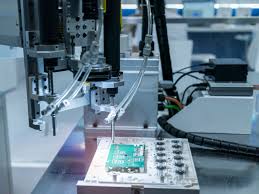
What is high-speed PCB manufacturing?
In addition to material and design considerations, high-speed PCB manufacturing involves specific fabrication processes tailored to minimize signal degradation. For example, manufacturers implement advanced etching techniques that enable the creation of fine traces and vias necessary for high-speed designs. Additionally, multilayer PCBs are commonly used to optimize routing and maintain signal integrity. These multilayer boards can house complex circuitry in a compact footprint, ensuring that high-speed signals can traverse the layers efficiently.
Thermal management is another critical aspect of high-speed PCB manufacturing. High-frequency signals generate heat, which can affect the performance and reliability of the PCB. Manufacturers employ various techniques to manage thermal issues, such as using thermal vias to dissipate heat and selecting materials with better thermal conductivity. Proper thermal management ensures that components operate within safe temperature limits, preventing potential failures and extending the lifespan of the PCB.
Moreover, advanced inspection and testing techniques are vital in high-speed PCB manufacturing. Automated optical inspection (AOI) and X-ray inspection systems are often used to ensure that the produced boards meet the required specifications and quality standards. Testing for signal integrity, such as time-domain reflectometry (TDR) and eye diagram analysis, helps identify potential issues related to impedance mismatches and signal degradation. These rigorous testing procedures ensure that only high-quality PCBs are delivered to customers.
In conclusion, high-speed PCB manufacturing is an essential aspect of modern electronics, focusing on producing circuit boards capable of handling high-frequency signals with minimal loss and degradation. By selecting advanced materials, implementing careful design considerations, employing tailored fabrication processes, managing thermal issues, and utilizing advanced inspection techniques, manufacturers can produce high-speed PCBs that meet the demands of today’s technology-driven world. As the need for faster and more reliable electronics continues to grow, high-speed PCB manufacturing will play a crucial role in shaping the future of the electronics industry, enabling innovations that push the boundaries of what is possible in communication, computing, and beyond.